
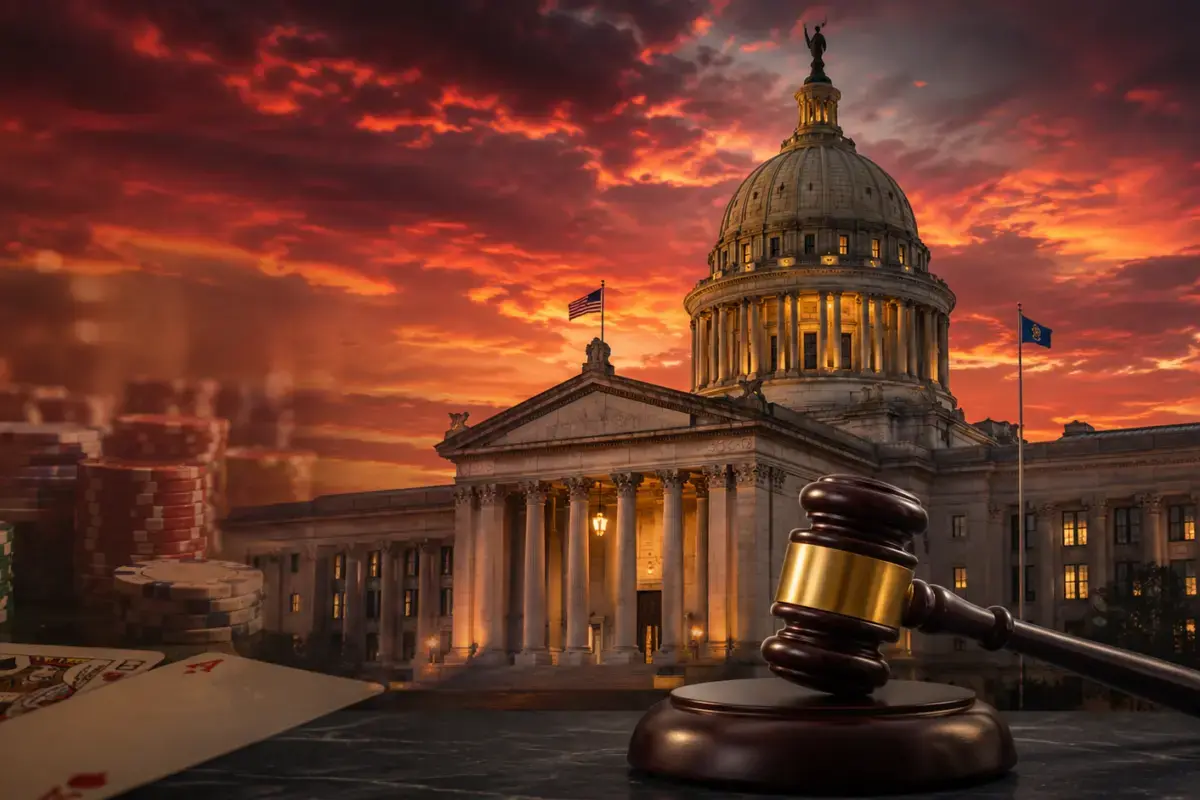
Oklahoma Bans Sweepstakes Casinos: What Players Should Know
After Oklahoma bans sweepstakes operations from November 1, players in the state who used platforms like Pulsz, High 5 Casino, or McLuck will need to migrate to other options or stop using those products. Offshore casino alternatives remain accessible and are not explicitly targeted by SB 1589 — the legislation was specifically written to address dual-currency sweepstakes platforms. Players should verify their preferred platform’s compliance status before the November effective date. Other states considering similar legislation include Texas and Florida, where bills were introduced in early 2026 but have not yet reached a floor vote.
Oklahoma bans sweepstakes casinos following a veto override on May 14 — the third US state to outlaw dual-currency platforms in 2026, effective November 1. Oklahoma’s sweepstakes casino ban is now law — and it got there despite the governor trying to stop it. The state legislature overrode Governor Kevin Stitt’s veto of Senate Bill 1589 on May 14, making Oklahoma the third state in 2026 to outlaw dual-currency casino platforms. The ban takes effect November 1, 2026.
For US players who rely on sweepstakes casinos as an alternative to regulated or offshore sites, the message from state legislatures across the country is getting louder: the legal grey area that sweepstakes platforms have operated in is closing, fast.
What Happened
SB 1589 passed the Oklahoma Senate unanimously (48–0) in March and cleared the House with a 65–21 vote in early May. Governor Stitt vetoed the bill on May 7, calling it “so broad that it criminalises everyday apps people use for fun.” One week later, on May 14, the legislature overrode that veto — the Senate voted 34–10, and the House followed at 68–19. The override means SB 1589 is now enacted law regardless of the governor’s objection.
What the Bill Does
SB 1589 expands Oklahoma’s gambling statute to explicitly cover online casino-style games that use dual-currency systems — the exact model sweepstakes casinos operate on. Under these platforms, players use Gold Coins for free play and Sweeps Coins that can be redeemed for cash prizes. The bill reclassifies this model as gambling by defining the virtual currencies used in dual-currency systems as a “representative of value.”
The scope is broad. SB 1589 does not just target the casino brands themselves — it extends criminal liability to platform providers, payment processors, geolocation vendors, gaming suppliers, promoters, and affiliates connected to prohibited activity. Violations are classified as Class C2 felonies, carrying fines of $500–$2,000 and up to 30 days in jail.
Tribal gaming operations on tribal land are exempt under the federal Indian Gaming Regulatory Act (IGRA), meaning existing tribal casinos in Oklahoma are unaffected.
The Bigger Picture — A National Crackdown
Oklahoma is not acting alone. The 2025–2026 legislative cycle has produced a rapid wave of sweepstakes bans across the US:
- California — banned sweepstakes casinos as of January 1, 2026
- Indiana — Governor Braun signed HB 1052 into law on March 12, 2026 (effective July 1)
- Maine — Governor Mills signed LD 2007 on April 6, 2026 (effective early July)
- Oklahoma — SB 1589 override enacted May 14, 2026 (effective November 1)
- Tennessee — sweepstakes ban passed the Senate 32–0, now heading to the House
States with existing bans include Connecticut, New Jersey, New York, Montana, and Washington. Maryland and Louisiana both have active bills advancing through committee. The pipeline of pending legislation suggests several more states could follow before the end of 2026.
The consensus forming across state legislatures is that the dual-currency model was always a legal fiction — a workaround that allowed real-money gambling to operate under the label of “promotions” or “social gaming.” Lawmakers are now moving to close that loophole explicitly.
What This Means for US Players
If you are in Oklahoma and currently play at sweepstakes casinos, you have until November 1 to use any remaining balances. After that date, these platforms will either exit the state or disable Sweeps Coin functionality for Oklahoma users.
More broadly, the shrinking availability of sweepstakes casinos is pushing players toward two alternatives:
1. Regulated state casinos — available only in eight states (CT, DE, ME, MI, NJ, PA, RI, WV). If you are in one of these states, regulated platforms like BetMGM, DraftKings, and FanDuel remain fully legal and licensed.
2. Offshore casinos — for players in the remaining 42+ states (including Oklahoma), offshore casinos licensed in Curaçao or similar jurisdictions continue to accept US players. These sites are not affected by state-level sweepstakes bans because they operate under foreign licenses. For a detailed comparison of how these models differ, see our guide on offshore vs regulated casinos.
Sites like Bovada, Ignition Casino, and Cafe Casino accept players from Oklahoma and most US states, process deposits via Bitcoin and other cryptocurrencies, and are unaffected by domestic sweepstakes legislation. For players who used sweepstakes sites as their primary way to play casino games online, offshore platforms with crypto deposits are the most straightforward replacement. Our crypto casino guide covers how to set up your first BTC deposit.
Will More States Follow?
Almost certainly. The pattern is clear: bipartisan legislative support, fast-moving bills, and an industry that has struggled to mount effective opposition. The veto override in Oklahoma is especially significant — it shows that even when a governor pushes back, the political momentum behind sweepstakes bans is strong enough to override executive resistance.
States to watch for the rest of 2026 include Tennessee (bill already passed the Senate), Maryland, Louisiana, and Minnesota, all of which have active legislation targeting sweepstakes platforms. If even half of these bills pass, the number of states where sweepstakes casinos can legally operate will shrink to a fraction of the current map by 2027.
For US players, the practical takeaway is simple: sweepstakes casinos are becoming a less reliable option with each passing month. Whether you move to a regulated state platform (if available) or an offshore casino with crypto banking depends on where you live — but the status quo of playing at sweepstakes sites with minimal legal scrutiny is ending.
18+ · Terms apply · Play responsibly.
For more on licensing and player protection, see the BeGambleAware — responsible gambling resource.